
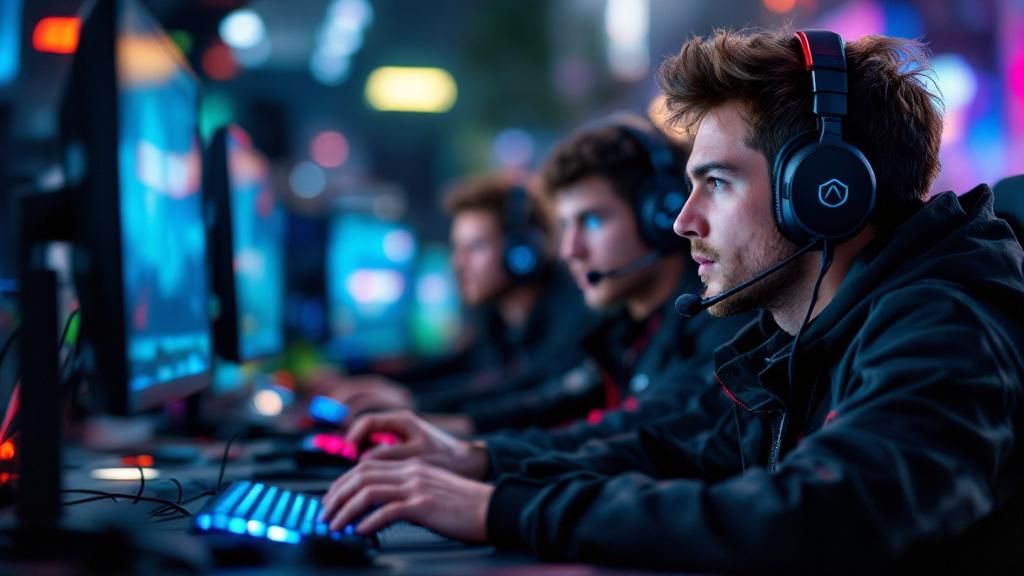
The professional esports landscape has experienced a remarkable transformation, with top-tier teams now investing considerable funding into cutting-edge gaming peripherals and hardware. From high-refresh-rate monitors to precision-engineered mice and precision keyboards, these technological investments have become integral to competitive success. This article examines how top-tier gaming teams justify expenditure on high-end equipment, investigates the specific equipment delivering competitive edges, and investigates whether superior gear actually converts into tournament victories or merely represents the industry’s escalating professionalism.
The Growth of Professional Esports Equipment
The evolution of esports hardware innovation has been deeply intertwined with the growth of competitive gaming. What originated from modest peripherals utilised by enthusiasts has transformed into sophisticated, purpose-built equipment built to millisecond precision. Companies today invest considerable development funding to examining the movement science behind tournament play, producing products specifically designed for professional competitions. This technical advancement reflects not merely modest upgrades, but a major transformation in industry perspectives on the link between equipment performance and competitive performance.
Contemporary professional esports teams regard hardware investment as essential infrastructure rather than discretionary expenditure. The competitive landscape demands equipment capable of delivering reliable, stable operation under intense pressure, with players requiring tools that reduce delay and maximise responsiveness. As tournaments intensify in competition and prize pools expand exponentially, organisations acknowledge that small advances in equipment quality can translate into meaningful benefits. This recognition has catalysed a upward spiral wherein manufacturers persistently develop new solutions, teams upgrade their arsenals, and performance benchmarks escalate accordingly.
Key Peripherals for Professional Players
Professional esports teams recognise that superior peripherals underpin of elite performance. Each component, carefully chosen and tailored, substantially affects performance consistency. Elite organisations allocate substantial budgets in equipment, recognising that marginal gains in speed, comfort, and accuracy accumulate into meaningful competitive edges. Players dedicate extensive time training with their equipment, rendering familiarity and quality essential. This expenditure demonstrates sector development and the recognised correlation between equipment quality and championship performance.
Mice and Keyboard Devices
Gaming mice serve as critical investments for competitive gamers, with teams typically purchasing numerous devices per competitor. Premium variants include variable DPI configurations, customizable key bindings, and highly sensitive detection systems with millisecond-level precision. Competition-standard devices leverage advanced tracking technology to reduce latency and maintain reliable cursor movement across varying gameplay scenarios. Teams undertake comprehensive assessments to find equipment suited to specific player needs. Brands like Logitech, Razer, and SteelSeries command the esports market, with elite competitors often receiving sponsorship deals and priority gear allocation.
Mechanical keyboards have grown into essential components, delivering exceptional tactile feedback and longevity compared to conventional alternatives. Professional players favour switches offering ideal actuation force and response times, typically spanning 45 to 60 grams. Programmable RGB lighting aids visual communication during competitive matches, whilst customisable commands simplify complex in-game commands. High-end models endure sustained, demanding usage across tournament seasons. Teams invest in various input device configurations, allowing players to adapt to varied gameplay requirements and personal preferences seamlessly.
Monitor and Display Systems
High-refresh-rate monitors fundamentally improve gaming performance, with pro esports teams mainly using 144Hz, 240Hz, or 360Hz displays. Faster refresh rates deliver smoother on-screen visuals, minimising motion blur and enabling superior opponent tracking during intense gameplay. Professional teams prioritise monitors offering minimal response delay and fast response times, generally below one millisecond. Colour precision and consistent brightness stay important elements, notably for titles requiring precise visual discrimination. Investment in premium display technology represents one of the most substantial equipment expenses, typically exceeding £500 per unit.
Display resolution and panel technology significantly influence professional equipment selection decisions. Most professional gamers favour 1080p resolutions on high-refresh monitors, focusing on frame rates over graphical fidelity. IPS and TN panel technologies each deliver separate strengths; TN panels deliver quicker response times whilst IPS panels provide better colour accuracy. Teams conduct comparative testing to determine optimal configurations for individual game requirements and player-specific needs. Curved and ultrawide displays continue to be less widespread in professional settings, as competitive advantage derives primarily from response time and refresh rate performance.
Investment Planning and Budget Allocation
Strategic Financial Management
Professional esports organisations handle equipment spending with detailed strategic approach, distributing significant amounts of their annual budgets towards gear purchasing. Teams perform comprehensive cost-benefit analyses to determine best allocation across monitors, input devices, and peripheral accessories. This systematic approach guarantees resources are distributed efficiently, improving competitive advantages whilst maintaining financial sustainability. Top teams typically dedicate between 5-15% of spending budgets to equipment purchasing, acknowledging that technological superiority closely connects with skill enhancement and tournament success rates.
Sponsorship and Gear Partnerships
Many elite esports teams utilise sponsorship agreements with peripheral manufacturers to reduce equipment costs considerably. These partnerships provide organisations with complimentary or discounted hardware, facilitating allocation in numerous alternative systems and bespoke arrangements without substantial financial burden. Manufacturers gain brand recognition and standing connected with professional teams, creating mutually advantageous relationships. Such partnerships have grown more complex, with sponsors supplying tailored devices customised specifically for specific athlete demands and preferences, boosting performance and promotional benefit.
Extended ROI
Competitive organisations evaluate equipment expenditures through extended performance metrics and tournament winnings rather than short-term gains. Superior peripherals enhance player satisfaction, lowering player departures and maintaining roster stability, which strengthens competitive consistency. Tournament prize pools and sponsorship income earned through successful teams substantially exceed equipment costs, warranting continued investment. Additionally, high-end peripherals creates company reputation, attracting talented players and obtaining lucrative sponsorships, building lasting competitive benefits and long-term profitability for esports organisations.
